You become a social media manager by running accounts that produce results you can point at, then showing that evidence to someone hiring. There is no licence, no required degree, and no certificate that hiring managers weight above a portfolio.
That sounds like good news, and it mostly is. The catch is that “show me results” is a higher bar than “show me a qualification”, and it takes longer.
What the job actually is
Before you aim at it, know what you are aiming at. A typical social media manager week is much less creative than the job title suggests:
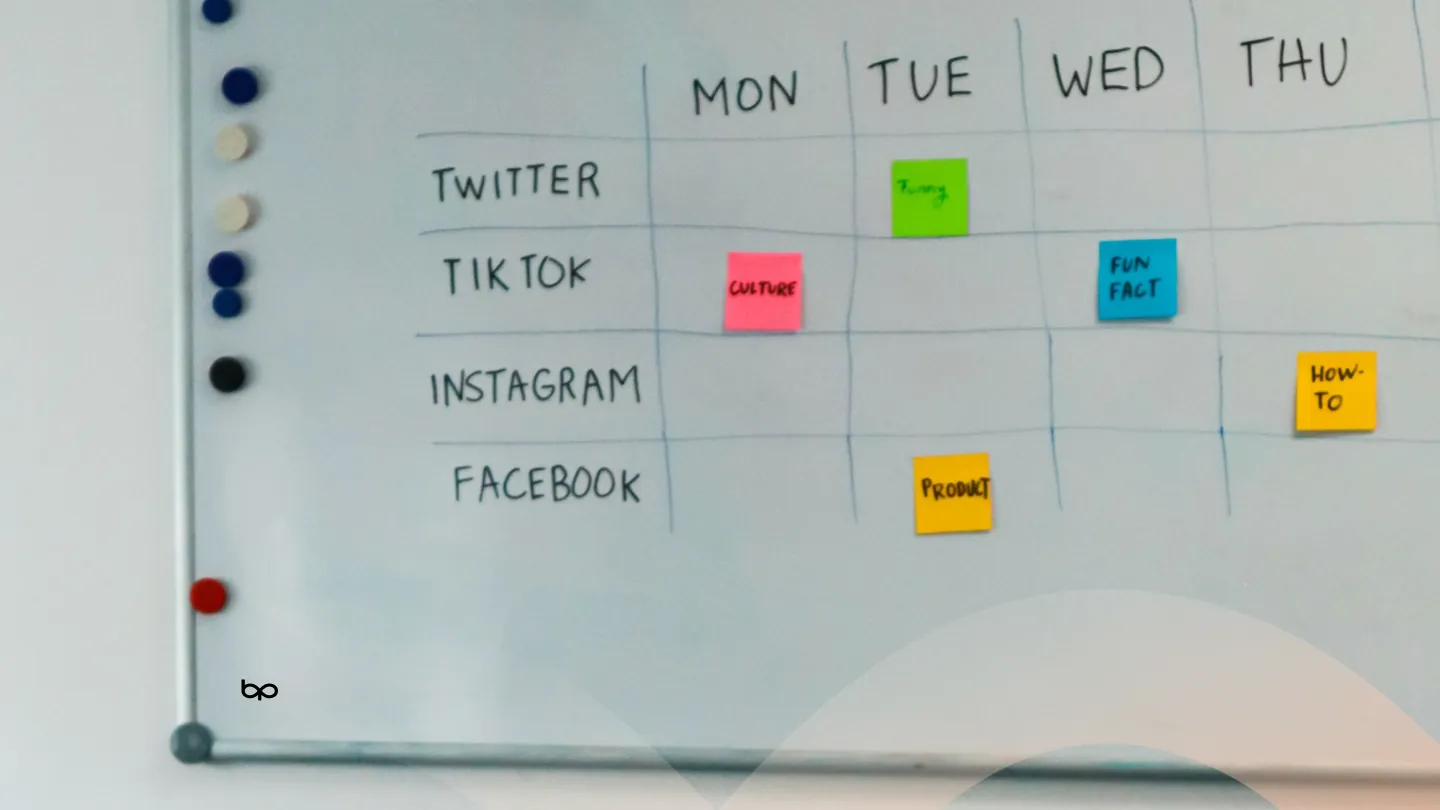
- Planning: a content calendar, usually a month out, mapped to whatever the business is trying to sell or say
- Producing: writing captions, editing short video, briefing or making graphics
- Publishing: getting it out on schedule across four to eight channels
- Community: replying to comments and DMs, which is where the actual hours go
- Reporting: monthly numbers, and an explanation of what they mean
- Firefighting: an outage, a bad review, a post that landed wrong
The full breakdown, in the format employers write it, is in the social media manager job description.
Do you need a degree?
No. Most listings say “bachelor’s degree in marketing, communications or related field”, most hiring managers ignore it, and the requirement is usually there because HR copied a template. A degree correlates with getting a first interview at larger and more traditional employers. It does not correlate with getting hired once someone has seen your work.
What genuinely helps instead:
- Accounts you have run, even small ones, with before-and-after numbers
- Short-form video editing, which is now the most requested hard skill in the job
- Basic paid media literacy, enough to run and read a boosted post
- Writing, which is still the thing most applicants are worst at
The skills, ranked by how often they are actually tested
| Skill | Why it matters | How to prove it |
|---|---|---|
| Copywriting | Every post is writing. Weak captions are the most common reason a good account underperforms | 20 posts you wrote, with the reasoning |
| Short-form video | TikTok, Reels and Shorts are where reach is. Being unable to edit is a hard blocker | Three finished videos you cut yourself |
| Analytics | You will be asked what worked and why | A one-page monthly report you produced |
| Community management | The largest time sink and the biggest reputational risk | Examples of replies, including a bad one handled well |
| Design basics | Not a designer’s job, but you will make things | A carousel or a set of story templates |
| Paid social | Where the money is, and the top of the salary band | A campaign with a spend figure and a result |
| Scheduling and ops | Nobody hires for it, everybody assumes it | Explaining your own workflow clearly |
Copywriting and video edit ability are what get you hired. Analytics and paid are what get you promoted. That distinction is worth internalising early.
Build a portfolio when you have no clients
The chicken-and-egg problem is real. Three routes work, roughly in order of speed:
Run your own account in a niche you care about. Not a personal account. A subject account, with a stated audience and a real goal. Six months of consistent posting with growth you can chart is a stronger interview artefact than any course. It also teaches you the thing courses cannot: what it feels like when a plan meets a real algorithm.
Do two free or cheap accounts for local businesses. A restaurant, a gym, a bookshop. Agree a three-month scope in writing, agree what you will measure, and hand them a report at the end. You now have two case studies, two references, and a sense of what client work is like. Do not do more than two free, and set the end date up front.
Volunteer for a nonprofit’s channels. Slower, but they tend to give you more autonomy than a business will, and the work is defensible on a CV.
Whichever route, keep the evidence as you go. Screenshots of the before state, monthly numbers, and one sentence on what you changed. Reconstructing this later is miserable and unconvincing.
What to put in the portfolio itself
Keep it to one page or one short deck. Hiring managers spend two minutes on it.
- Three to five accounts or campaigns, each with: the goal, what you did, the numbers, and what you would do differently
- Actual posts, embedded or screenshotted, not just a link to a profile that has moved on
- One example of something that failed, with the diagnosis. This is the single most persuasive item most portfolios lack
- Your reporting: one real monthly report, redacted if needed
Use consistent metrics across the examples. If you are using engagement rate, calculate it the same way each time: the engagement rate calculator is a quick way to keep that honest across accounts with different follower counts.
Which first jobs to apply for
Aim at the titles below the one you want.
- Social media coordinator / assistant. The most common real entry point. Scheduling, community, reporting inputs. Expect to be junior for 12 to 18 months.
- Marketing assistant / generalist at a small company. Less prestigious, more scope. You will end up owning social because nobody else does, which is the fastest way to get manager experience.
- Agency junior. Long hours, several accounts at once, and the steepest learning curve available. Agency time is the standard accelerator into a senior in-house role. Read what the agency side involves on the agencies page.
- Content creator / editor. If video is your strength, this route in is often shorter than the coordinator route.
What to be careful with: “social media intern” roles that are unpaid past a few weeks, and “founding social media manager” listings at very early startups where the actual job is doing everything with no budget and no brief.
Pay expectations for each step, with the source data, are in the social media manager salary guide. The short version: entry-level self-reported pay sits well under the headline averages, so do not benchmark your first offer against a national average.
Certifications: which are worth the time
Modest value, and mostly for keyword-matching in applicant tracking systems rather than for skill.
- Meta Blueprint and the Google Ads certifications are free or cheap and genuinely teach the paid platforms
- Platform-native learning hubs (TikTok, LinkedIn, Pinterest for business) are free and current
- Paid “social media manager” courses from creators are usually repackaged free material. Buy one only if you need the structure
Nobody has ever been hired on a certificate over a portfolio. Some people have been filtered out of an ATS without one.
The first ninety days in the role
Assume the account you inherit is worse documented than you were told. A workable order:
- Weeks 1-2: audit. What is posted, when, by whom, with what results. Get access to every account properly, in the business’s name, not a former employee’s personal login
- Weeks 3-4: fix the obvious. Broken links, wrong bio, dead channels that should be closed rather than limped along
- Weeks 5-8: establish a calendar and a publishing rhythm you can actually sustain. Consistency beats volume, every time
- Weeks 9-12: produce the first monthly report on your own terms, with the metric you want to be judged on
If you are moving from one account to several, the operational habits in managing multiple social media accounts will save you the first painful month.
The short version
- No degree required. A portfolio of accounts you have run beats every credential
- Copywriting and short-form video editing are what get you the first job
- Run your own niche account plus two local businesses, and keep the evidence as you go
- Apply for coordinator, small-company generalist, or agency junior roles rather than manager titles
- Certifications help with automated filters, not with hiring managers
The tooling part of the job
Once you are running more than one account, publishing by hand stops scaling and starts eating your week. Most of the job’s tooling falls into six categories, covered honestly in the social media manager tools roundup, including competitors.
BulkPublish sits in the scheduling category: one composer for 15 platforms, per-platform edits before anything goes out, and a calendar view of what is queued. The free tier is enough to practise the workflow on your own account before a client is paying for it.
- Channels: Free: 3 (1 per platform). Pro: 30 (2 per platform). Business: 75 (5 per platform).
- Posts: Free: 1/day. Pro: 30/day. Business: unlimited.