

Connect Client Social Accounts Without Passwords
A client onboarding playbook: what to send, one link per account, how to read a link that stalls, and the mistakes that cost agencies a day.
33 posts
A client onboarding playbook: what to send, one link per account, how to read a link that stalls, and the mistakes that cost agencies a day.
Which groups are worth saving, how to name them, and how to keep them accurate. A worked example with an agency's 15 accounts, plus the mistakes that make a group quietly go stale.
A worked example of a three-person approval process, how to pick who reviews what, the mistakes that make approvals slow, and a checklist to set one up in BulkPublish.
A simple daily routine for answering comments from several accounts: what to answer first, what to leave to the network's own app, and how far behind to expect.
A routine for answering DMs and reviews as a small team: who owns what, when to assign, snooze, note or archive, a worked week, and the mistakes that leave customers waiting.
A worked example of building a small library of post templates and hashtag groups: what deserves a template, how to name things, the mistakes that make a library rot, and a checklist for pruning it.
A worked example of reading link clicks and UTM tags after a launch week, the mistakes that quietly skew the numbers, and how to decide which of the two measures to trust.
Where social media time really goes, measured by task, and the eight changes that cut it, with realistic time saved for each and what not to bother with.
How to batch social media content properly: the four stages, time estimates per stage, batch sizes that hold up, and where batching goes wrong.
A social media workflow that survives contact with a real week: six stages, owners, time per stage, handoff rules and where workflows usually break.

Turn an Airtable content calendar into scheduled posts. The field setup, the status gate, and why writing back matters more than you think.

Five MCP servers that let an assistant publish to social media, compared on the signal that matters most in a young ecosystem: when each was last actually updated.
Evergreen scheduling keeps your best content circulating. How to build the library as a list, mix it, and review it so it never goes stale.
Publish from a spreadsheet with n8n, the row-tracking problem nobody warns about, and when a CSV import is the better answer.

Plan posts in a spreadsheet and let Zapier publish them. Here is the Zap, the sheet structure that makes it reliable, and when a CSV import is simpler.
How to set up a repeating post, choose a frequency and keep it safe: the test before you save, the number rule and how to pause.
A five-step walkthrough for letting an assistant or agent publish: pick the connection, limit its access, start in draft, choose the review routine and set guardrails.
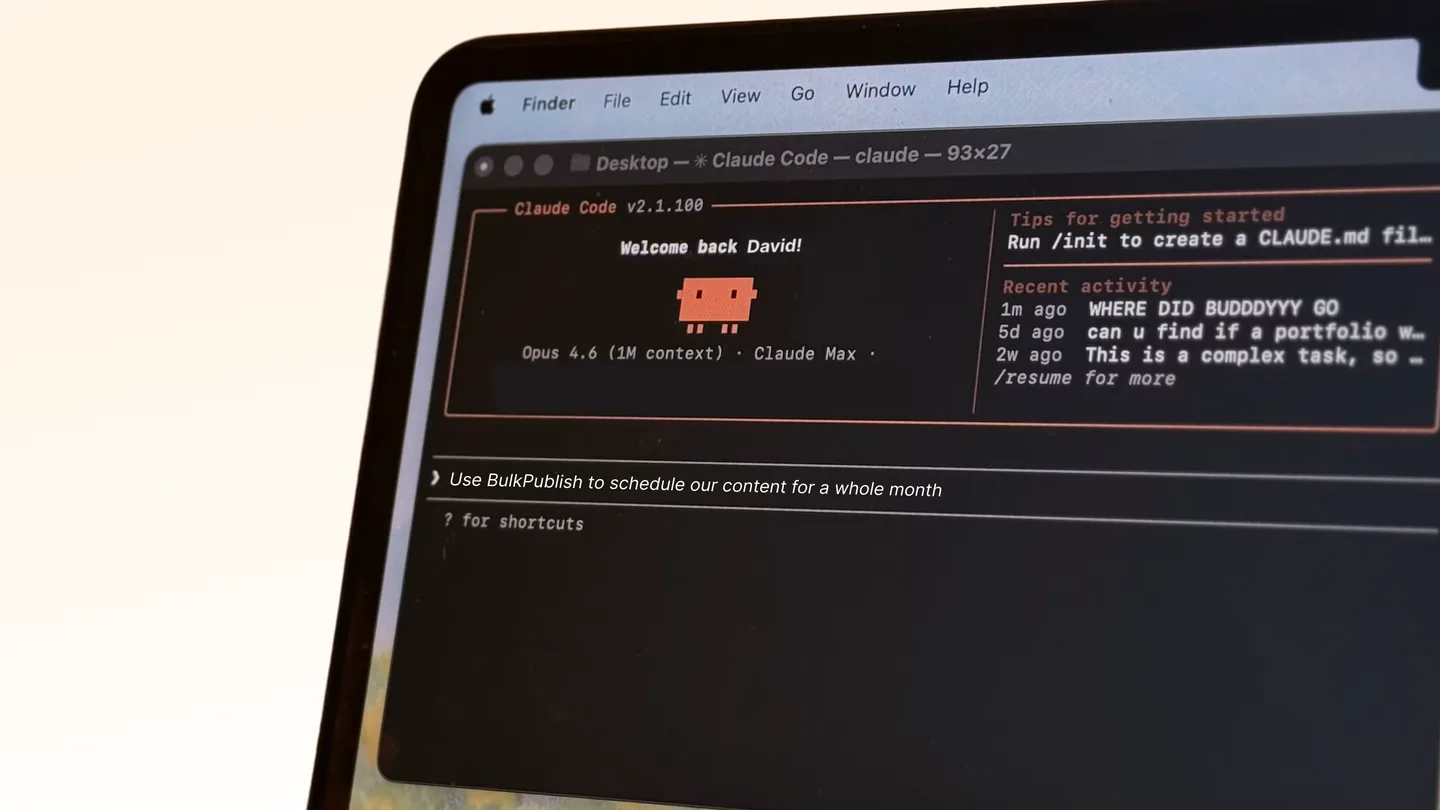
Connect Claude to a publishing tool and it can draft, schedule and check posts in conversation. Here is the setup and the guardrails worth having.
Plan content in a Notion database and publish it automatically. The property setup that makes it reliable, and the status gate you need.
Publish from a Notion database with a Zap, the status gate that stops drafts going out, and the rich-text problem that produces odd-looking posts.
Recurring post, queue refill or rewrite? A decision guide to which one fits which content, and where each goes wrong.
How to turn an RSS feed into social posts with n8n, plus an honest note about when the built-in feed reader does the job without a workflow at all.
Turn a feed into posts with a Zap, plus the built-in option that may make the Zap unnecessary, and the filter step most people skip.
If you plan content in a spreadsheet, you should not be retyping it into a composer. Here is the column format, what happens to bad rows, and the limits worth knowing.
A checklist for judging a publishing API for agent use: what an agent needs that a person does not, the failure modes behind it, and the questions to ask.

Make scenarios for social publishing, where its visual model helps, and the error handling that stops a scenario failing silently.
A five-column template that imports straight into a scheduler, with what each column is for and why it is deliberately small.
Most of your audience never saw your best post. How to audit your archive, give each old post a verdict and rewrite the ones worth bringing back.
A three-column CSV template for planning and importing social posts, plus what each column does and the quoting rules that stop imports breaking.
MCP is how AI assistants talk to outside tools. Here is what a server does, why the protocol exists, and what it means for you as a user rather than a developer.
Announce new WordPress posts across your social accounts automatically, with the filtering and rewriting that stops it reading like a bot.
Announce new WordPress posts automatically, with the filter that stops it broadcasting everything and the reason not to post the headline.
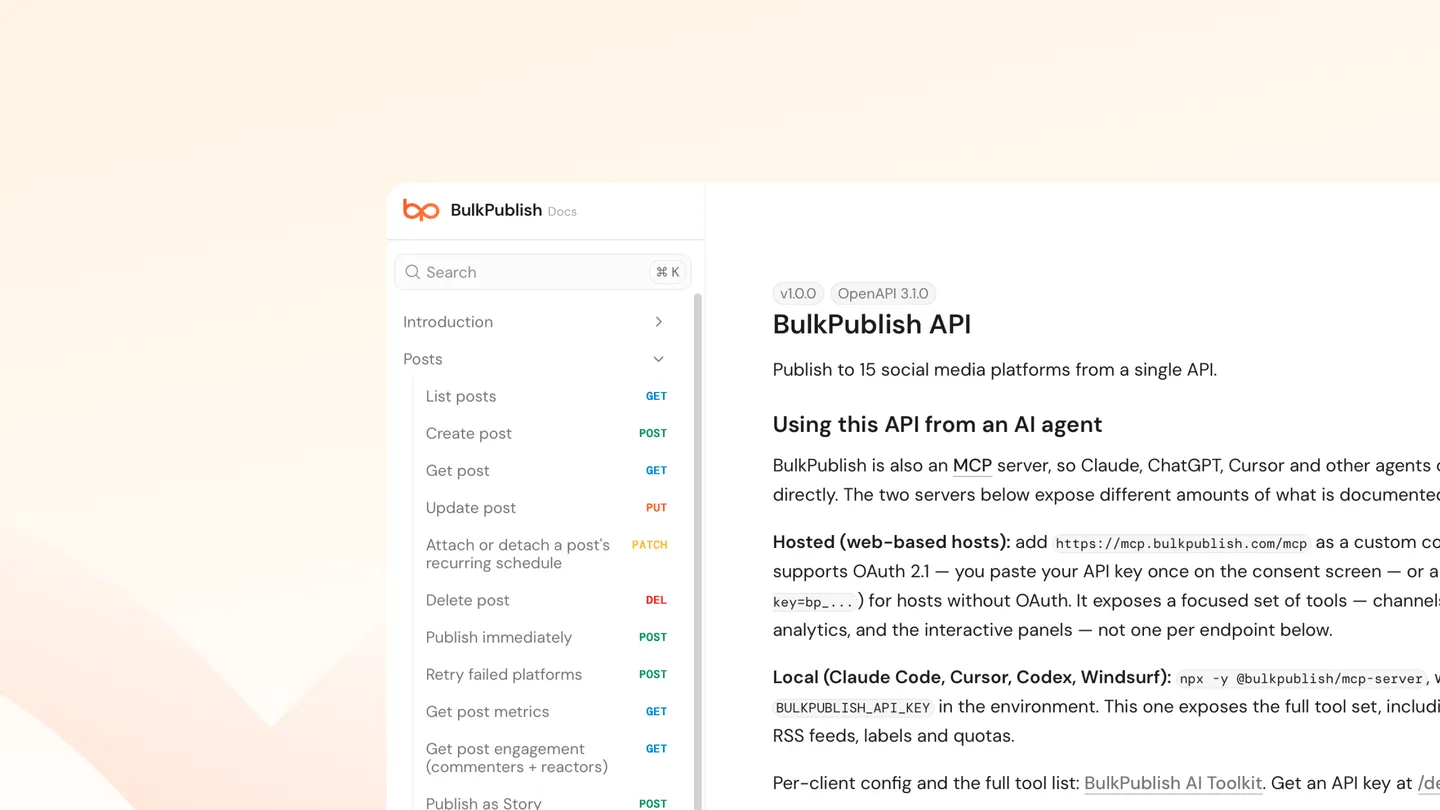
A practical guide to using the BulkPublish API for programmatic social media scheduling, bulk content uploads, and custom integrations.