How to Schedule Facebook Posts (2026)
Facebook Pages support scheduling through Meta's own tools. Here are the three formats, the very large text allowance, and how it fits with everything else.
214 posts
Facebook Pages support scheduling through Meta's own tools. Here are the three formats, the very large text allowance, and how it fits with everything else.
Google Business Profile posts show up next to your listing in Search and Maps. Here are the three post types, what they accept, and what to schedule.

The five Instagram formats you can schedule, what each one requires, and the media rules that decide whether a post publishes or fails.
LinkedIn schedules natively up to three months ahead. Here is what it covers, the four post formats, and when a separate tool earns its place.
Mastodon is federated, so scheduling works a little differently. Here is what posts accept, why your instance matters, and how to queue in advance.
Pinterest schedules natively but caps the queue at 10 Pins. Here is what that means for anyone pinning regularly, and what the platform accepts.
Snapchat publishing covers Stories, Saved Stories and Spotlight. Here is what each accepts, the very short caption limit, and how scheduling works.

Posting to a Telegram channel on a schedule, what the bot connection means, and the media limit that catches people out.
What Threads accepts, how to queue posts and threads in advance, and how it compares to the other short-text networks you are probably also posting to.
Two ways to schedule TikTok: the native web scheduler with its 10-day ceiling, or a tool that also covers Reels and Shorts from the same upload.

Tumblr has the most generous text allowance of any major network. Here is what it accepts, how to queue posts, and what to do with all that room.
Scheduling posts on X, the 280-character reality, when to thread, and what to know about the API costs that shape third-party tools.

A Short schedules like any other upload. The part worth automating is getting the same vertical video onto TikTok and Reels at the same time.
YouTube schedules from the upload flow itself. Here is how it works, what the Premiere option adds, and when to publish the announcement elsewhere too.

Running several brands is mostly about keeping them properly separate. Here is the structure, and the specific mistake it exists to prevent.

Platform schedulers are free and often good. Here is where they stop, using four platforms' documented limits, and when moving off them is worth it.
Plan content in a Notion database and publish it automatically. The property setup that makes it reliable, and the status gate you need.
Publish from a Notion database with a Zap, the status gate that stops drafts going out, and the rich-text problem that produces odd-looking posts.
Short answer: yes, with caveats. Here's what a single publishing app can and can't do across 15 networks, and where the limits come from.
Three platforms, three registers, one workflow. Here is what each accepts and which parts of a post genuinely have to change.
One vertical video, three platforms. Here is what each accepts, why the captions should differ, and how to publish all three from one upload.

Post to 15 networks from Node with one API call. Working examples for creating, scheduling and attaching media, plus the mistakes worth avoiding.
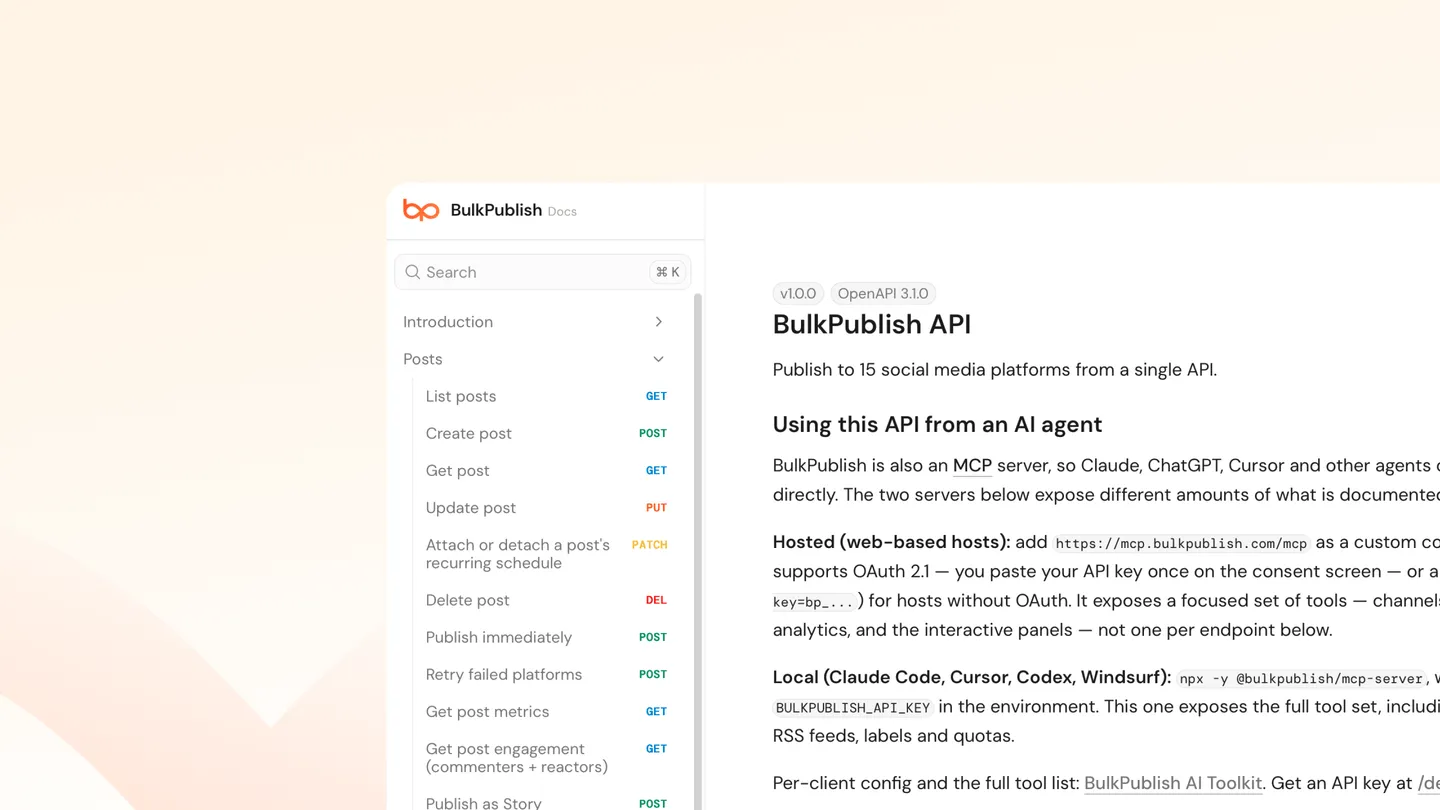
There is no PHP SDK, so this is the REST API directly. Working cURL and Guzzle examples for creating, scheduling and checking posts.
Post and schedule across 15 networks from Python. Working examples, the per-platform fields that are actually required, and how to avoid surprises.